200 hr Yoga Teacher Training rishikesh

Begin Your Journey Towards Yoga Mastery

Join our 200 Hour Yoga Teacher Training (RYT-200), a Yoga Alliance USA registered program that combines the vibrant spirit of Goa with the authentic yogic traditions of Rishikesh. Designed for aspiring teachers and dedicated practitioners, this course helps you deepen your understanding of yoga while building the skills and confidence to teach effectively.

The curriculum covers Traditional Hatha Yoga, Ashtanga Vinyasa, Pranayama, Meditation, Kriyas, Bandhas, Yoga Philosophy, Anatomy, Alignment, and Teaching Methodology. Through practical training, guided teaching sessions, and personalized feedback, you will learn how to create and lead yoga classes for students of all levels.

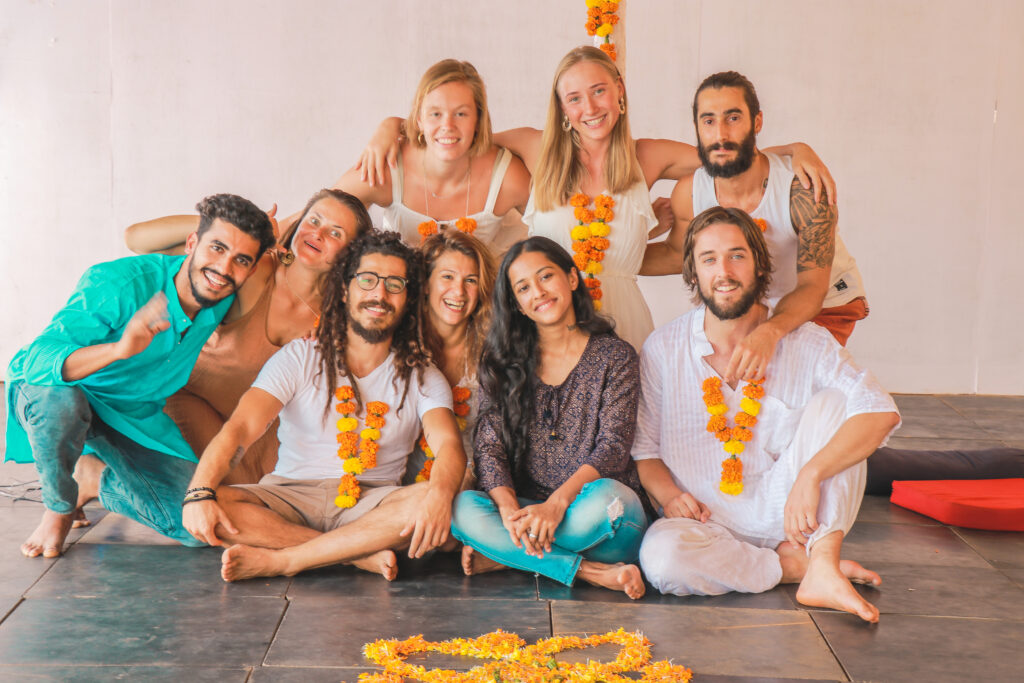
Beyond the training, you’ll become part of a supportive community, sharing experiences and learning alongside like-minded individuals from around the world. Whether your goal is personal growth or professional certification, this transformative program offers a balanced journey of physical, mental, and spiritual development while embracing the unique essence of both Goa and Rishikesh.


Make yourself a healthy being with the benefits of yoga.

Risus in hendrerit gravida rutrum quisque non tellus. Egestas integer eget aliquet nibh praesent tristique magna sit amet. Sit amet faucibus et molestie ac venenatis urna cursus eget.
+
Year of Experience
+
Number of Center
Yoga Accessories
+
Yoga Trainers

Your Journey to Yoga Mastery Starts Here

Experience a comprehensive Yoga Alliance certified training designed to deepen your practice, expand your knowledge, and prepare you to teach with confidence.
Days
0
Hours
0
Modules
0 +
Authentic
0 %

What is Yoga Alliance Teacher Training Certification? RYT-200

Yoga Alliance is a non-profit association based in the US that plays an important role by providing the required accreditation to yoga teacher training programs that include 200-RYT, RYT-300, and RYT-500 conducted by yoga schools worldwide.

What does the Yoga Alliance do?
Yoga Alliance prescribes the standards for yoga training. To meet such standards, it has been made mandatory to adhere to the same so as to be able to ensure the required amount of study time that is undertaken for the course.

About 200 hour yoga teacher training course certification with yoga alliance

The basic eligibility to teach yoga at any yoga studio, community center gym, or other such centers, is that you must have accomplished a 200 hour yoga teacher training under a Yoga Alliance registered yoga school.

Once you have fully attended and successfully graduated from a 200 Hr Yoga Teacher Training program conducted by a yoga school registered under the Yoga Alliance, you become entitled to join the Yoga Alliance. Though many studios may not necessarily demand you to join the Yoga Alliance certification, they would still prefer graduates from schools that follow the standard guidelines as set by the Yoga Alliance when faced with a large number of applicants. So a certified yoga teacher will undoubtedly stand out among the rest.

200 hour yoga teacher training Course

Multi-Style Yoga Teacher Training Syllabus
Ashtanga Vinyasa Yoga

Ashtanga Vinyasa Yoga

Ashtanga Vinyasa Yoga was founded by K. Pattabhi Jois during the twentieth century. He gained his knowledge from his Guru Shri Tirumalai Krishnamacharya. This style of asana is dynamic and requires the synchronisation of breath. This synchronisation done in a flow is known as a vinyasa.

The primary series of Ashtanga vinyasa yoga is a precise sequence of postures linked with vinyasa sequences. The series consists of 75 yoga poses that take about 90 minutes to finish (approximately). It begins with Sun salutations A and B and moves towards standing postures, sitting posters, inversions, and backbends before relaxation. The entire series is designed to realign the spine, detoxify the body, and build strength, flexibility and stamina.

Traditional Hatha Yoga

Hatha Yoga seeks to unite mind, body and spirit through five elements –

Asana (postures), Pranayama (yogic breathing), Mudra (body gestures), Bandha (energy locks) & Shatkarma (inner cleansing).

These body-centred practices under Hatha yoga not only strengthen and cleanse the physical body, but they also cultivate prana (life-force energy) and invoke kundalini (dormant spiritual energy).

While practising Hatha Yoga, you will also have the chance to learn about Yin and restorative yoga as part of our 200-hour Yoga TTC. You will be taught Basic and intermediate-level Hatha Yoga. Spanning over 25 days, this TTC will enhance your experience and knowledge of other yoga practices and traditions as well.

YOGASANA

Gentle Warm-up exercises, Dynamic Warm-up, Full-body Warm-up before a practice, Traditional Hatha Sun-salutation, Ashtanga Vinyasa Sun-Salutation, The concept of Asanas, varieties, and effects.

Traditional Hatha Yoga poses Modern and Contemporary Yoga Poses, Standing sequence and Standing postures, Seated Postures, supine, and prone poses, and inversions.
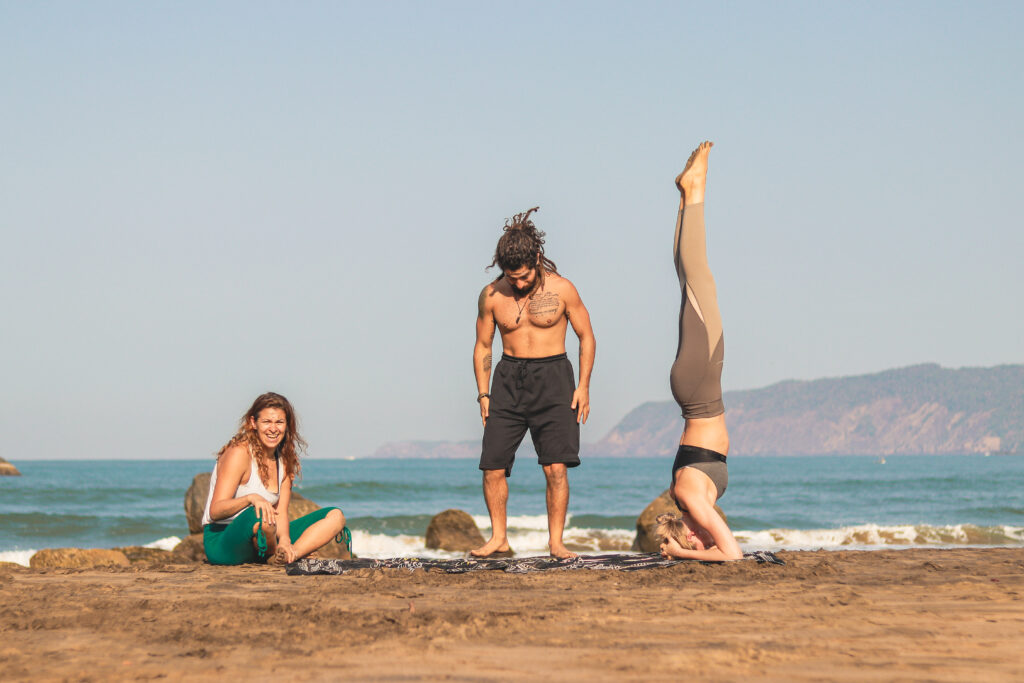
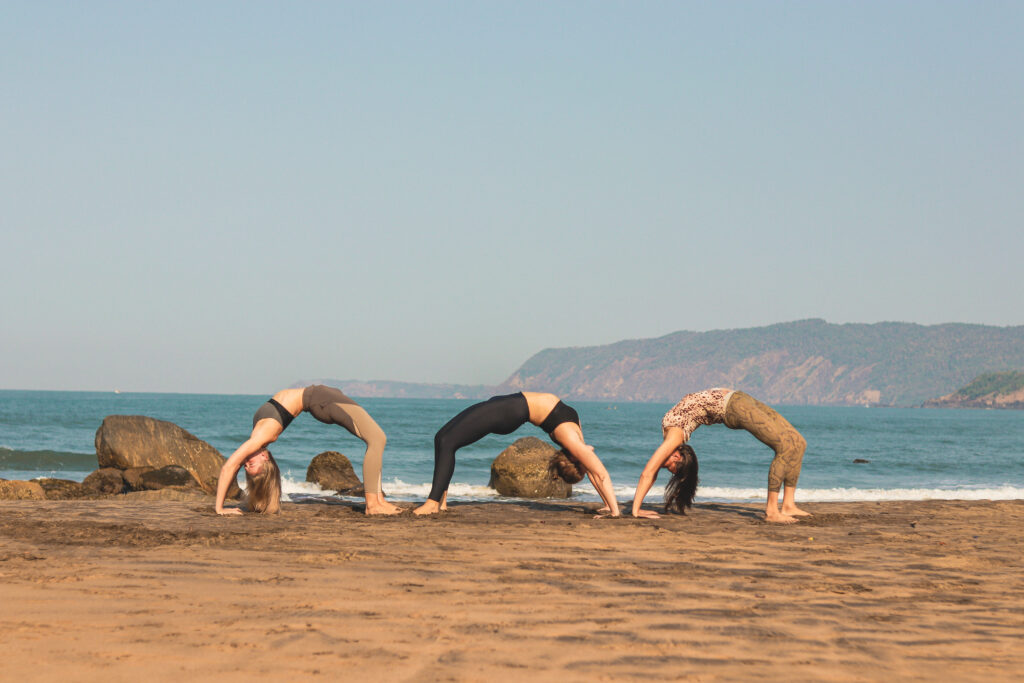
Workshops on Handstand, arm balance, back-bending, hip-opening, Therapeutic Yoga, how to avoid injuries, safety in practice.

Introduction to traditional practices of Ashtanga and Hatha yoga  Ashtanga Vinyāsa yoga primary series, Pawan PawanMuktasana series, Various Vinyāsa flows, and art of yin Yoga.

PRANAYAMA AND DHYANA

What is Prana, types of Prana, importance, and benefits of Pranayama. Different types of pranayama: Nadi Shodhana, Shitali, Shitkari, Bhramari, Ujjayi, Bhastrika, Surya Bhedi and Chandra Bhedi, Kapalbhati etc.

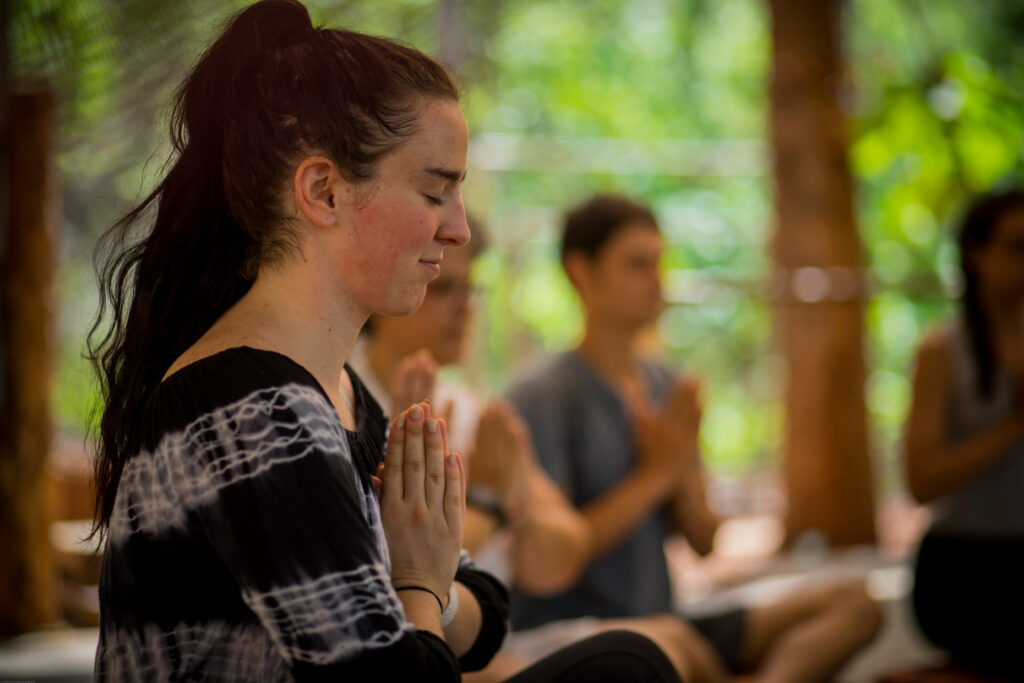
The concept of Meditation, types of Meditations: Observing the breath, Body-scanning, Vipassana, Transcendental Meditation, Chakra-Meditation, Tips for developing concentration, Bahir and Antar trataka, Nada meditation (sound meditation), Ajapa Japa, Antar- Mouna (silence practice), Mantra meditation, Yoga Nidra, Inner visualization etc

HUMAN ANATOMY

Basic concepts of functional anatomy and physiology related to movement. Application of anatomical principles to yoga practice (mechanics of yoga asana, its benefits, and contraindications, healthy patterns of movement, etc).
Practical anatomy with a major emphasis on the skeletal system and joints, muscular system and its importance in Asanas, Endocrine, respiratory, circulatory systems and its uses in Yoga.

Study of different regions of the body: The knee, hips, spine, and shoulder. Types of injuries, causes, and cures with Yoga practices.

ASANA ALIGNMENT AND ADJUSTMENTS

Learning how to safely go in and out of a posture,  to give cues and instructions of various postures,  Anatomical understanding of a yoga posture, and names of the muscles used in an individual pose.

Benefits of a yoga posture, Contra-indications, hands-on adjustments, Modification, advance variation, and use of props according to an individual’s need
Sun Salutations classical, Sun Salutations (A) and Sun salutations (B) from Ashtanga Vinyasa Yoga, Alignment of Standing poses Seated poses, Forward bends, Backbends, Inversions, Balancing, Hip opening Poses, and so on.

TEACHING METHODOLOGIES

Step by Step Class Structure Planning, Understanding Qualities of a Yoga Teacher, The attitude of a Yoga Teacher and being yourself, Safety measures like How to avoid injuries, and Cultivation of command through voice modulations.

How to deepen your connection with your inner-being, the Importance of Communication, Demonstration, Assisting, giving cues and instructions, Traditional Hatha Yoga class, Principles of Sequencing various Vinyasa flows, Peak pose, and how to build up to one.

Setting up a class, teaching big groups and small groups, and personal training. Learning Yoga Business, marketing strategies, how to set up your studio and build a community.

Basics of Teaching Yoga classes, Learning the Terms and Key Points for the Yoga Asana Teaching classes, Confidence building, Regular Teaching Practice. 

YOGIC PHILOSOPHY

What are Yoga and its history, evolution, and concept of Yoga, Meaning, and Aim of Yoga? What is Hatha Yoga? What is Ashtanga Yoga? What is Vinyasa And Yin Yoga?

Introduction to Yoga Texts, Bandhas, Mudras, Prana, koshas, Kundalini, Chakra, Stories of ancient yogis. Four paths of Yoga, Vedas and six systems of Indian Philosophy. Meaning of Om, Omkar and Various Sanskrit Mantras, ShatKriyas, Eight Limbs of Yoga: Yama, Niayama, Asana, Pranayama, Pratyahara, Dharana, Dhyana, Samadhi.

Concepts of Gunas (Satva, Rajas, Tamas) and their application in daily life. Meaning and importance of Mantra Chanting, Lifestyle and ethics of yoga in the life of a practitioner.

SHAT KRIYAS AND AYURVEDA (6 Cleansing Techniques and Holistic Study of Human Body)

Introduction of Shat Kriyas where “Shat” is Six and “Kriyas” are Techniques or Actions, Importance of cleansing for a Yogic lifestyle, Understanding the purification process.

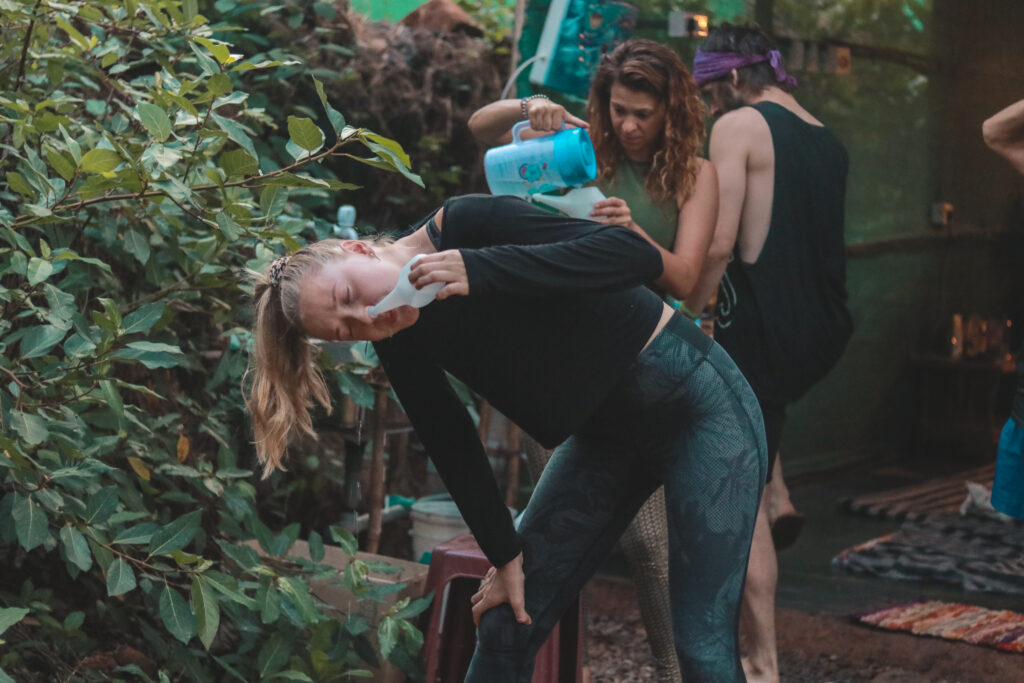
Various Cleansing Techniques: Jala neti, Sutra neti, Eye cleaning (eyes cups), Kunjal Kriya, and Trataka. Importance of ShatKriyas in Hatha Yoga Practices. Relationship between ShatKriyas and Pranayama.

Basic Principles of Ayurveda, History of Ayurveda, Philosophy of Ayurveda, concept and Ayurveda Nutrition, Tridoshas, Pancha Mahabhuta, Tri-Gunas, and Diet according to Ayurveda.

Program Highlights

Comprehensive Training Modules for your 200-Hour Yoga Course

What Our Customers Say

Choose Your Perfect Plan

  • Tue - Fri : 6:00am to 10:00pm
  • Trainer
650Include Tax, Accessories
  • Tue - Fri : 6:00am to 10:00pm
  • Trainer
749Include Tax, Accessories
  • Tue - Fri : 6:00am to 10:00pm
  • Trainer
899Include Tax, Accessories
  • Tue - Fri : 6:00am to 10:00pm
  • Trainer
1099Include Tax, Accessories

Perfect Poses For You

Stay Calm Be Healthy

Contact Us